Forgotten in the Heat: Ruby, Brooks, and a Chance at Life
Written by: April Kimmel, OPS Primate Specialist
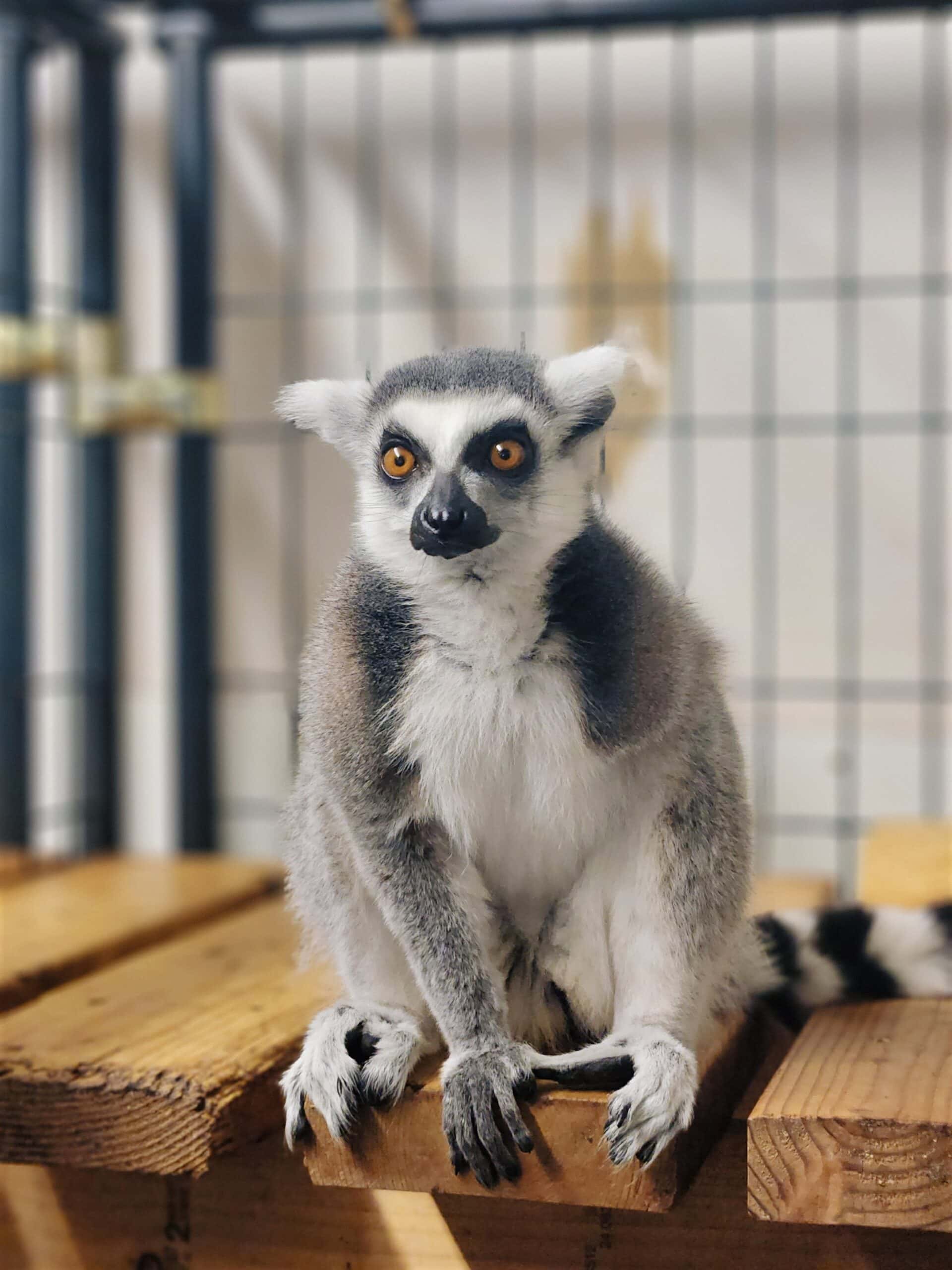
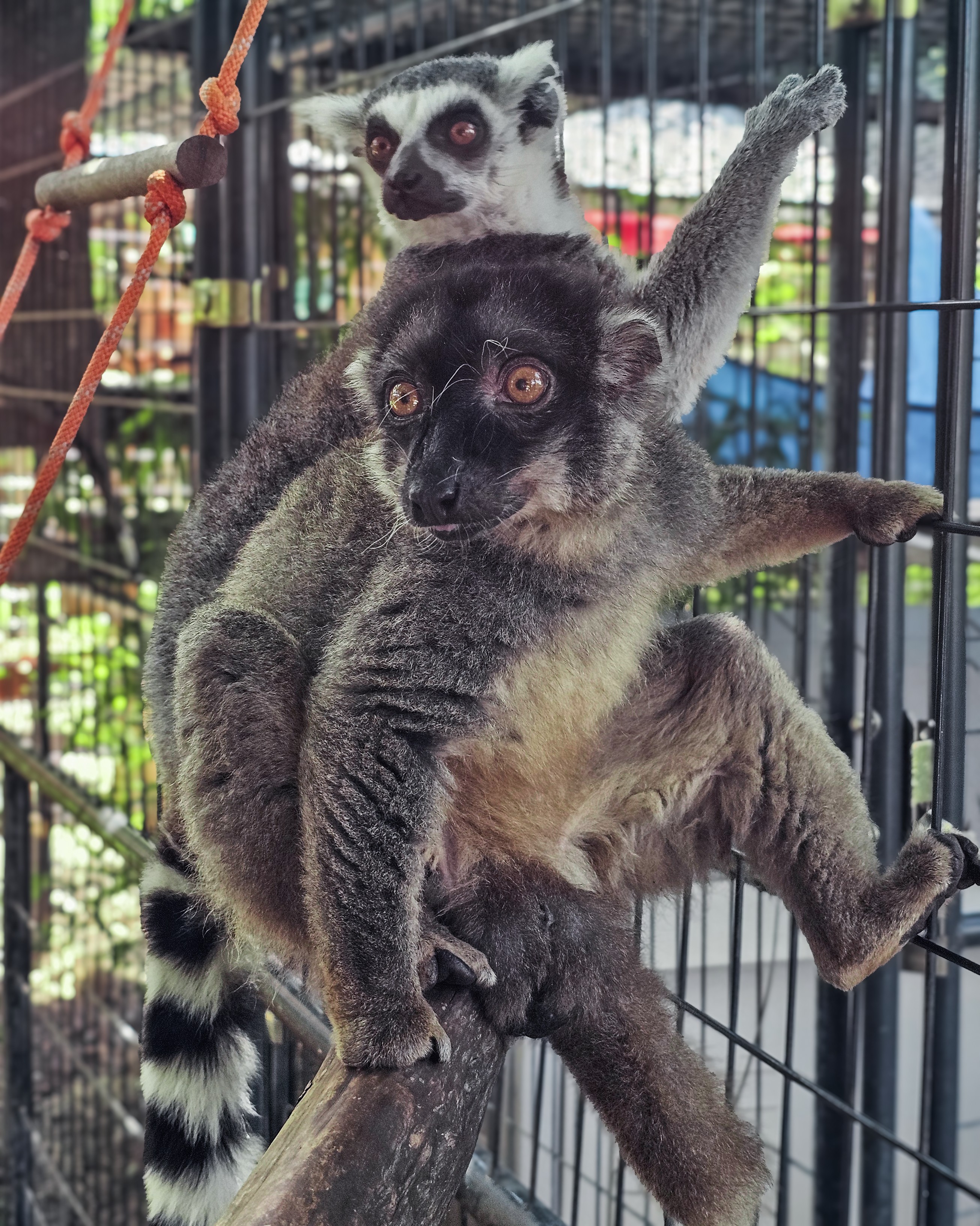
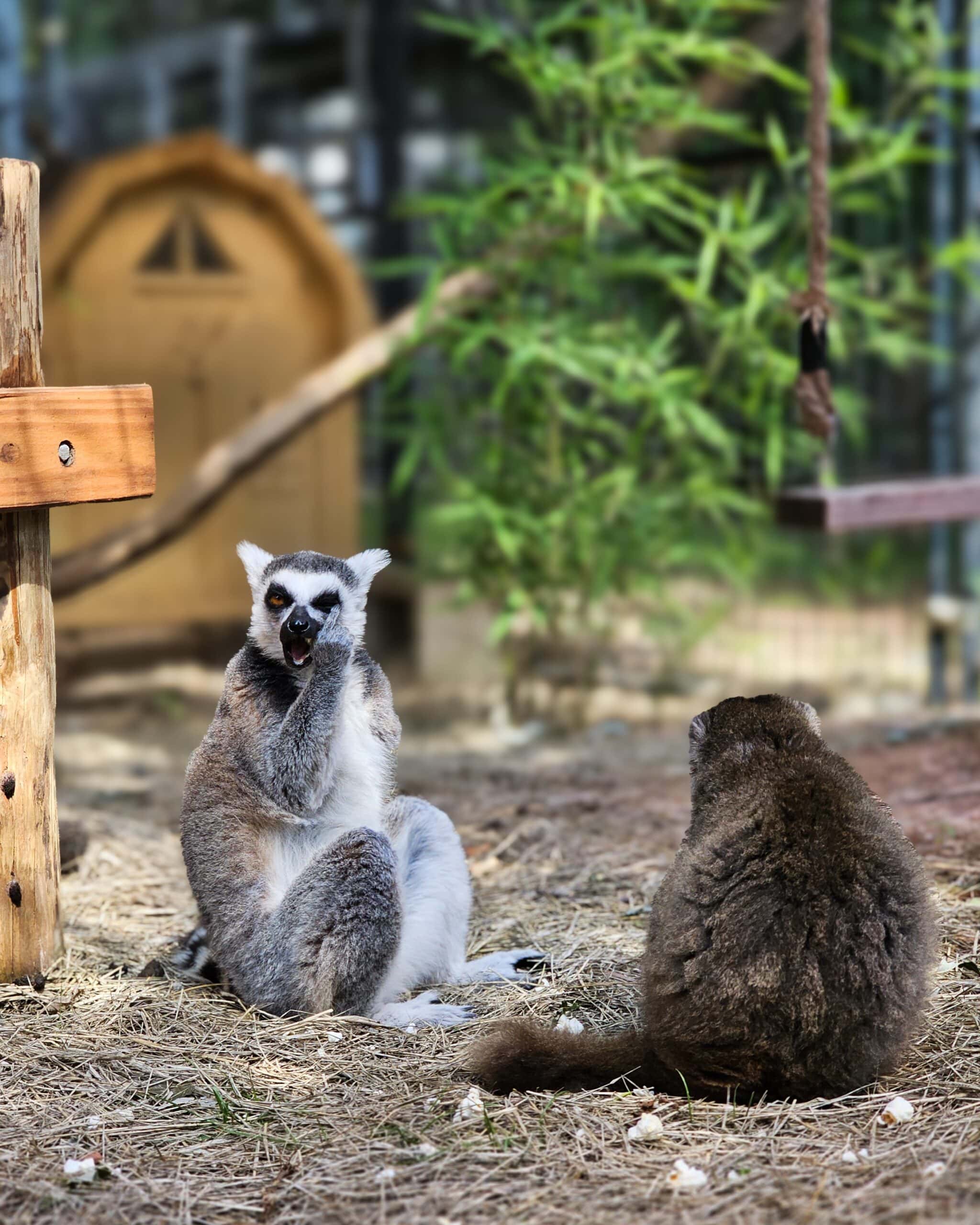
Ruby
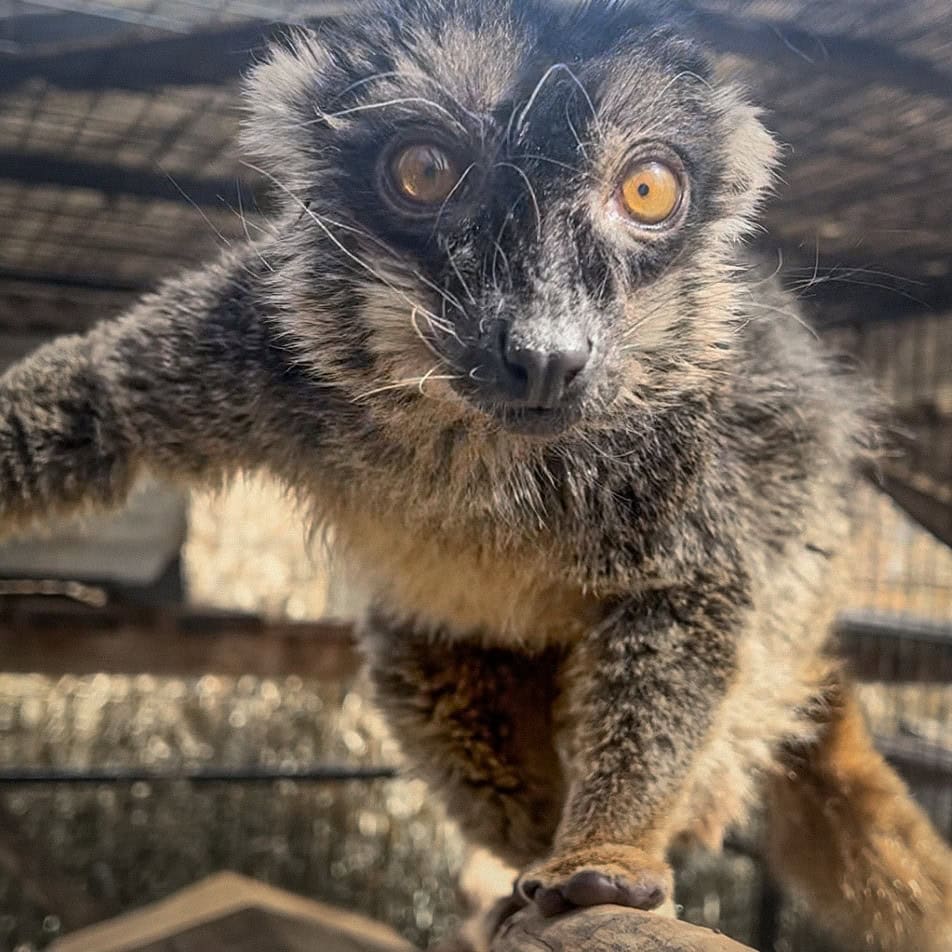
Brooks
Her water had turned stagnant- a still, hot, green film sitting untouched in the corner of a suffocating barn. Inside was Ruby, a Ring-Tailed Lemur, trapped in sweltering neglect under the brutal Oklahoma sun. The barn, airless and broiling, was no place for any living being, let alone one so intelligent, social, and sensitive. Ruby languished in silence, caged beside three other lemurs, her world reduced to thirst, hunger, and heat. When rescuers arrived, they found she had only one arm. No records explained what had led to such a traumatic loss, no chart, no treatment, no sign that anyone had ever cared. She was one of 354 animals rescued in May 2021 from an Oklahoma property. According to official reports, most of the animals lived in similar misery: denied food, clean water, shelter, and even the most basic veterinary care.
Among them was Brooks, a solitary Brown Lemur whose suffering was especially harrowing. Though heat now endangered the lives of those around him, the sharp bite of frost and freeze the previous season had already taken comfort from him. He had been forced to endure harsh winters without proper shelter. Frostbite had ravaged his extremities so badly that exposed bone showed through the skin on his hands and feet where his fingers and toes had once been. By the time help arrived, nearly all had to be amputated save for his thumbs. What should have been agile hands for climbing and grasping were reduced to stumps. His long, expressive tail which was so vital to balance and communication- was also severely damaged, the end withered and dry and had to be amputated halfway.
The person responsible abandoned those in his care, allowing over 350 sentient beings to slip into despair. Some did not survive long enough to be saved. But some did. Brooks and Ruby lived. And now through compassion, advocacy, and tireless work, they’ve been given a second chance, one filled with fresh air, clean water, and the gentle promise of safety.
The Long Road to Recovery
Ring-tailed lemurs live by a rigid social order; one dictated almost entirely by lineage. A female lemur’s place in the hierarchy depends on her blood relation to the dominant female, and without clear family ties, the process of forming new groups becomes deeply complex. For the rescued lemurs who faced introductions, this reality posed a painful challenge. Their former owner hadn’t even met their basic needs, let alone kept meaningful records. There was no documentation to guide caretakers, only fragments of hearsay, scraps of observation, and the hard-earned insight of the sanctuary primate specialists who worked patiently to piece together possible pairings.
Ruby, in a rare stroke of mercy amidst so much suffering, had been rescued alongside Grant- a fellow ring-tailed lemur from that same sweltering, neglected barn. She spent her first years of recovery at the Oklahoma Primate Sanctuary in Grant’s company, finally experiencing what it meant to be cared for, safe, and respected. Their bond spared her the emotionally taxing process that so many of the other lemurs endured, tentative introductions, rejected pairings, and solitary waiting. With Grant, Ruby had stability.
But in early 2025, everything changed. Grant passed away, and Ruby found herself alone.
For an animal already forced to survive so much, the loss was profound. Her once-secure world shifted beneath her again. But the sanctuary staff, those who had nurtured her back from the edge of despair, immediately turned their attention to her next chapter. Observations began, pairings were considered, and every effort was made to ensure that Ruby’s next companion would offer her a future filled with comfort and companionship. She had already lost too much. Ruby’s journey, like Brooks’, was far from over.
Brooks’ Solitary Struggle
Where Ruby had once known the comfort of a companion, Brooks had only the echo of his own calls.
When Brooks was rescued, he wasn’t just physically broken- he was alone. As a Brown Lemur, Brooks stood apart from the others at the Oklahoma property. Isolated, injured, and desperate for contact, he began mimicking the vocalizations of the Ring-tailed Lemurs who lived nearby. His attempts to cross the language barrier weren’t simply signs of intelligence, they were signs of longing. Brooks was trying to bridge species lines just to be heard.
Every winter following his liberation from that dark property proved to be cruel to Brooks in a unique heart-breaking way. Brooks showed no understanding of how to use a warm house after his rescue, a grim sign that he may have never had access to one. During colder months, when temperatures dropped to dangerous lows, caregivers moved him into the sanctuary clinic to ensure he stayed safe. His inexperience, or perhaps trauma tied to previous attempts at shelter, meant he couldn’t be left outdoors without risking his life. For long stretches of time, Brooks had to remain inside, denied access to the fresh air and open spaces that are so essential to a lemur’s well-being, simply because he had never been taught how to seek warmth.
Grooming, a vital part of a lemur’s daily life, a way to care for his coat and regulate body temperature, became impossible for Brooks. Without fingers, he couldn’t untangle or clean his dense fur. As temperatures rose, he overheated easily. Sanctuary caregivers became his groomers, gently brushing out thick loose hair to help him stay cool and clean, a process that sometimes frustrated him. It was a labor of love and necessity.
More than anything, Brooks needed a friend. Not a human caregiver or a kind observer, but someone who could truly understand him. Someone who would curl up beside him in the sun. Who would groom him back. Who would answer his calls not with confusion, but with companionship.
The search for that someone began in earnest.
A Hopeful Introduction
In the weeks following Grant’s death, caregivers began the careful process of finding Ruby a new companion. Their first hope lay with Carlisle and Esme, a pair of Ring-Tailed Lemurs who had once survived the cruelty of the pet trade. Kept in a cramped birdcage far too small for any lemur, they had endured years of unnatural confinement. But somehow through all of it, they had clung to each other. Their bond had been their lifeline. And together, they had arrived at the sanctuary and begun their journey toward healing. It was that resilience and the strength of their companionship that made staff believe they could be the safe harbor Ruby needed.
At first, there was reason to be optimistic. Carlisle showed a gentle interest in Ruby. Through the fence, the two began grooming one another, a sign of trust and affection. When the time came for a face-to-face meeting, things went encouragingly well. They foraged side by side, groomed each other in the sun, and even navigated a brief mishap during which a misstep had left Carlisle standing on Ruby’s tail, which they resolved with grace and mutual understanding. Carlisle had made his decision. He welcomed Ruby.
But Esme did not.
A female ringtail’s place in the group is inherited, passed down from her mother. Without that blood connection introductions can be deeply fraught. So, for Esme, Ruby was an outsider. Despite every effort by the sanctuary team, gentle, repeated introductions, positive reinforcement, careful monitoring- Esme remained distant and eventually, intolerant. Her rejection was not cruel; it was merely instinctual.
The bond between Carlisle and Esme had helped them survive unthinkable hardship. And now, it formed a barrier Ruby could not pass.
A Language All His Own; Calling into the Void
For Brooks, the search for companionship proved especially complicated. As the only Brown Lemur at the sanctuary, Brooks carried a heavy loneliness that even the regular attention from staff could not lift. He was surrounded by Ring-Tailed Lemurs- lively, social animals who spoke a different dialect of calls, gestures, and postures than his own. While all lemurs share certain instincts, each species has its own nuanced vocabulary. Brooks’ chirps and grunts, his body language and greetings, often went ignored entirely.
But the barriers weren’t only linguistic. Brooks bore the scars of his past in ways that left him uniquely vulnerable. With most of his fingers and toes lost to frostbite, and his tail partially amputated, it was unlikely he could properly defend himself if a confrontation were to arise. And so, every potential introduction had to be approached with an extraordinary level of caution. Not just for emotional compatibility, but for physical safety.
The sanctuary team, determined to help Brooks find connection, eventually considered a pairing with Abby and Boyd, a long-established ringtail duo known for their calm demeanor. From the other side of a shared fence line, Brooks made the first move. Again, and again he tentatively attempted to interact through the fence. He vocalized softly, seeking to bridge the species gap through sheer persistence.
But Abby and Boyd never reached out. Day after day, they ignored his attempts. They never responded to his calls, never showed curiosity over his presence. It wasn’t cruelty. It was indifference. Brooks simply didn’t register as part of their world. The team made the decision to step back from the pairing. Abby and Boyd had spoken in the quietest of ways: not with aggression, but with absence.
And so the search continued for someone who would not only see Brooks but understand him.
When Paths Finally Crossed
Two failed introductions might have signaled defeat to some, but instead, they revealed something far more valuable: a chance worth taking for both lonely primates.
Ruby and Brooks, though different in species and story, shared the same quiet ache. Both had reached for connection and found only distance. And both bore injuries that left them permanently changed- missing limbs, missing digits, missing defenses. Their physical limitations meant any pairing had to be made with care. But their temperaments told a different story.
Gentle. Affectionate. Calm. These were the traits that came up repeatedly in notes and observations, whether describing Brooks or Ruby. They were survivors, yes, but not hardened. Not aggressive. Just soft souls looking for space to heal.
So, the sanctuary team took the chance. The two were given access to a shared fence line, a neutral space where they could observe, gesture, vocalize. A space to test the waters in the way only lemurs can. And what followed was not hesitation, but recognition. Brooks approached the barrier with his familiar, cautious enthusiasm. Ruby responded. They mirrored one another, exchanged curious calls, and stood face to face as though they’d simply been waiting for the moment to arrive.
The signs were too promising to ignore. Staff moved quickly, choosing not to make them wait any longer for the possibility of a companion at last. Brooks had spent too long in solitude. Ruby had already endured too much loss. And when hope appears with such clarity, sometimes the kindest thing is to meet it head-on.
Ruby was gently released into the habitat that had, until that moment, belonged only to Brooks.
Brooks called out to Ruby, just as he had so many times before; tentative vocalizations shaped by loneliness and hope. In the past, his calls had gone unanswered, lost on the ears of nearby Ring-Tailed Lemurs who didn’t understand his voice, even when he tried to mimic theirs.
But this time was different. This time, there was an answer.
For the first time since his rescue, Brooks wasn’t calling into silence. Ruby called back.
A Future in Tandem
From that first exchange, Brooks and Ruby never looked back. There was no tentative circling, no long and wary acclimation. It was as if the two lemurs had been speaking the same quiet language all along, one written not in species-specific calls or social rank, but in the mutual understanding of what it means to survive, to lose, and to keep hoping anyway.
They were soon spotted grooming one another through the warm hours of the day, their hands, whole or partial, working carefully through fur with the focus of those who know this is more than hygiene. It is trust, it is care, it is belonging. When they foraged in the grass, it was rarely for themselves alone. A found leaf, a prized sprig of clover, a peanut discovered in the underbrush- these were shared without hesitation.
For Brooks, the transformation was remarkable. The lemur who had once depended entirely on human caregivers to keep his coat in order no longer needed them for that most personal of upkeep. Ruby had taken over with a quiet diligence, her single hand moving with precision and commitment. Even with her own missing limb, she left Brooks looking sharper, cleaner, and more at ease than anyone had ever seen him.
Both had endured horrors that could have stripped away their ability to trust. Both had walked the uncertain road toward safety without knowing if it would end in companionship or more loneliness. And both had once called into the void, Brooks’ voice reaching for someone, anyone, to hear him, met only with silence. Now, when he calls, Ruby will answer, not out of curiosity or duty, but because his voice is hers to hear. In that simple act, the silence of his past is gone.
They do not waste time questioning it. They live it. Grooming in the dappled shade. Sharing the bounty of a good forage. Resting side by side with the contentment of those who finally, after too long, are exactly where they are meant to be.
At long last, Brooks and Ruby see one another. And in that, they have found their forever.